
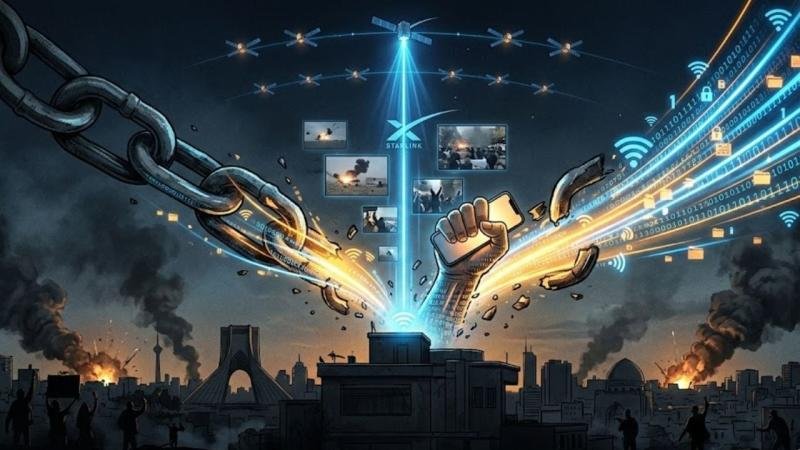

Tehran. Extensive discussions are ongoing in India on sensitive aspects of national security and digital sovereignty regarding Starlink, the satellite-based internet service of SpaceX, the space technology company owned by industrialist Elon Musk. The centerpiece of this entire discussion is the developments in Iran, where Starlink provided an alternative way to keep citizens connected to the digital world during the nationwide internet restrictions and protests. While on the one hand this arrangement maintained an uninterrupted flow of information to the general public, on the other hand it also highlighted the serious security risks arising from uncontrolled influence of a foreign private enterprise on the national communications network of a sovereign nation.
Functionality and Regulatory Challenges of Satellite Internet
Starlink provides high-speed Internet services via a vast network of satellites located directly in space, unlike traditional ground-based Internet systems. This feature makes it extremely useful during emergency situations and natural disasters, especially when local networks are completely disrupted or shut down under administrative orders. However, the smooth operation of this service requires special receiving equipment and specific technical conditions. This very technology, which provides relief in emergencies, poses a very complex and unprecedented challenge for governments in terms of its regulation, monitoring and control. According to available details, during the digital lockdown in Iran, approximately 50 thousand Starlink terminals were being used after being transported into the country through illegal routes. These terminals played a decisive role in maintaining communications with the global community, in response to which Iranian authorities launched a wide-ranging campaign to jam signals, seize equipment, and identify unauthorized terminals. The Government of Iran considered operating such services without statutory approval as a direct attack on the country’s internal sovereignty, which has now become a serious policy consideration for many developing countries, including India.
Diplomatic decisions, global geopolitics and security risks
The death of Mahsa Amini in police custody in Iran in September 2022 sparked widespread public anger and protests. At the same time, the then US Secretary of State formally announced the issuance of a special general license aimed at facilitating digital freedom and information access for Iranian citizens. Soon after, Elon Musk publicly hinted at activating Starlink service over Iran, which created a huge stir in international diplomatic circles. Reports by various security analysts have analyzed in detail the potential strategic and national security threats of this type of functionality associated with Starlink. According to these analytical reports, SpaceX has deep and strategic business relationships with US defense establishments and national security programs. For this reason, a strong fear is expressed that foreign powers or friendly countries may put pressure on the company to stop the service, keep it running or share confidential data as per their geopolitical preferences. However, experts also believe that these possible apprehensions should not be directly seen as unauthorized interference in a specific incident without any concrete evidence.