
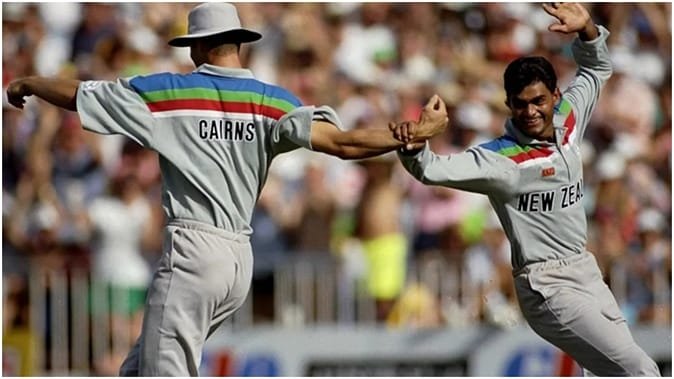
Indian cricket has traditionally had a very rich and proud tradition of spin bowling, which has given the country world-class spin bowlers. Since the great spinner Ravichandran Ashwin distanced himself from international cricket, this question has remained a topic of discussion among cricket experts whether the Indian cricket team will be able to find a quality off-spinner with his ability and impact in the future or not. Former New Zealand veteran off-spinner Deepak Patel has expressed his deep surprise on this subject and has admitted that in a huge country like India, since Ashwin, no established off-spinner has emerged who can continuously leave an indelible mark at the global level. Along with this, he has also given his frank views on the changing role of off-spin bowlers in modern cricket, the strategic thinking of captains and the increasing influence of the DRS system.
India has failed to produce an effective off-spinner after Ashwin
Deepak Patel, who has played thirty-seven Tests and seventy-five One Day Internationals for New Zealand, believes that the last major Indian off-spinner to prove effective in the modern era of T-20 cricket has been Ravichandran Ashwin. He said in an interview that if this is considered deeply then R. Ashwin seems to be the last bowler who proved his bowling prowess even in the shorter format. Although some other bowlers have achieved sporadic success in Test matches, the success graph of off-spinners has continuously gone down in the T-20 format. It is noteworthy that Ashwin had taken seventy-two wickets in sixty-five T-20 matches for India at an economy rate of less than seven, while representing various franchises in the Indian Premier League, he had taken one hundred and eighty-seven wickets in two hundred and twenty-one matches. Patel wondered why despite having such a big cricket system, India has not been able to find an off-spinner of that quality.
Thinking of modern captains and impact of DRS on off-spin bowling
According to Deepak Patel, the decreasing utility of off-spinners in this format of the game cannot only be held responsible for the aggressive style of modern batsmen, but the thinking and approach of the team captains is also largely responsible for it. He said that he is surprised as to why today’s captains have become so negative about off-spin bowlers, because everything depends on how the captain uses that bowler in his strategy. Apart from this, he also termed the Decision Review System i.e. DRS in modern cricket as a big factor in changing the traditional equations of batting and off-spin bowling. According to him, earlier batsmen used to often stop the ball using pads to save their wickets, but now due to the strict rules of DRS, this traditional defensive option has become completely risky for the batsmen, due to which both their technical skills and aggressive approach have improved.
India-New Zealand Test series and the future of spin bowling
Discussing the upcoming Test series between India and New Zealand, the former Kiwi all-rounder said that the outcome of this match will completely depend on the performance of the batting units of both the teams, as both the sides have very strong fast bowling attacks. He praised the current New Zealand captain Tom Latham, saying that he has been managing the spin bowlers very well, as he has shown in the case of Mitchell Santner and Ajaz Patel. Although he also believes that it is difficult to expect much support from the spinners on New Zealand’s seasonal pitches, he still wants the art of off spin to get its due respect and importance in the longer format of Test cricket.