
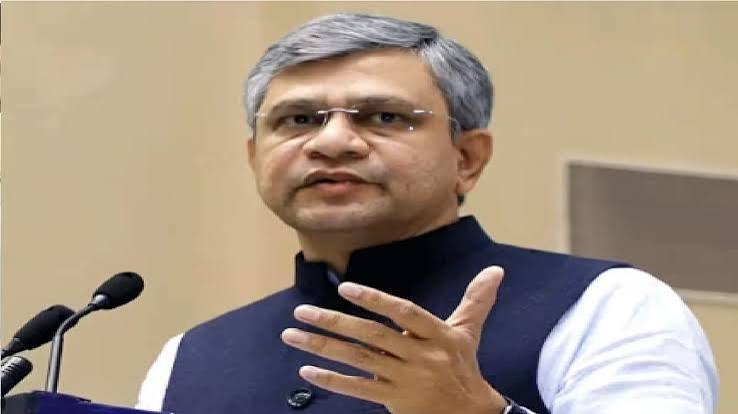

Along with rapidly boosting the semiconductor i.e. chip manufacturing capacity in India, special focus is also being given to the essential raw materials and chemicals with the help of which state-of-the-art chips are manufactured. Union Minister Ashwini Vaishnav said this important thing in the Bloomberg New Economy Forum. He said that one of the biggest challenges facing India at present is the availability of selected essential materials and their concentration in only a few countries or places. To deal with this challenge, India will have to develop within its own country the full capacity to understand, handle, create, process and protect these materials.
Phased changes in India’s semiconductor program
The Union Minister informed that in the first phase of this ambitious programme, the main emphasis was on involving one major global company. A total of 12 major projects are underway under this phase, out of which 5 have also started their commercial production. Now in the second phase of the semiconductor programme, more emphasis is being laid on the development of essential materials and domestic technology.
Development of industrial system to reduce technological dependence.
Ashwini Vaishnav clarified that India will have to create a strong and self-reliant system in which there will be domestic capacity right from the finished product to its various components and all the materials used in making them. To make manufacturing successful in the long term in any region, it is essential to have a strong industrial ecosystem. Under this strategy, India is continuously moving forward in important sectors like semiconductor as well as railways and defence.
Long term goals for future plans
India is moving forward by dividing its policies and plans into short-term, medium and long-term periods:
Short Term Goals: Duration of 3 to 5 years.
Medium Term Goals: Period of 5 to 15 years.
long term goals: Period of 20 to 25 years.
India will have to constantly change its strategies according to the changing geopolitical circumstances and global politics. Additionally, it is important to take into account the entire technology spectrum in the semiconductor sector from 2 nanometers to 90 nanometers, which also includes the challenge of becoming a major center of global dependency in the 28 to 90 nanometer chip manufacturing segment.
Why is India a reliable option for global companies?
India’s old and strong record has been said to be the main basis of trust for global technology companies. For the last 40 years, Research and Development (R&D) centers of big global companies have been designing and developing new products in India. No disputes related to intellectual property (IP) infringement have come to light in this long period. India’s strong democratic and legal system gives global companies full confidence that they can operate safely here regardless of political or policy changes.
Growing importance of cyber security and trust
In this era of chip manufacturing, cost is no longer the only parameter, but cyber security and mutual trust have also become increasingly important in the global supply chain. India wants to emerge as a reliable and strong partner for the world on every front of design, manufacturing and evaluation of the finished product.
Cisco’s new technology arrangement and global collaboration
Cisco Chairman and Chief Executive Officer Chuck Robbins said during this time that technology companies should work collaboratively with governments. India is among the few countries where advanced technological capabilities can be developed on a large scale.
He said that the company has prepared a special technical system through which the country concerned maintains complete control over the operation of the data and system. This system has already been implemented in several countries in Europe and Canada, and the company is preparing to bring it to India in the coming months.
Key future priorities for India
According to Ashwini Vaishnav, the biggest priority for India going forward would be to not just limit itself to finished products but expand its capabilities to manufacturing modules, cutting-edge components, basic materials and advanced machines. This will require sustained investment over a long period of time, a high level of technical expertise and a strong industrial ecosystem.