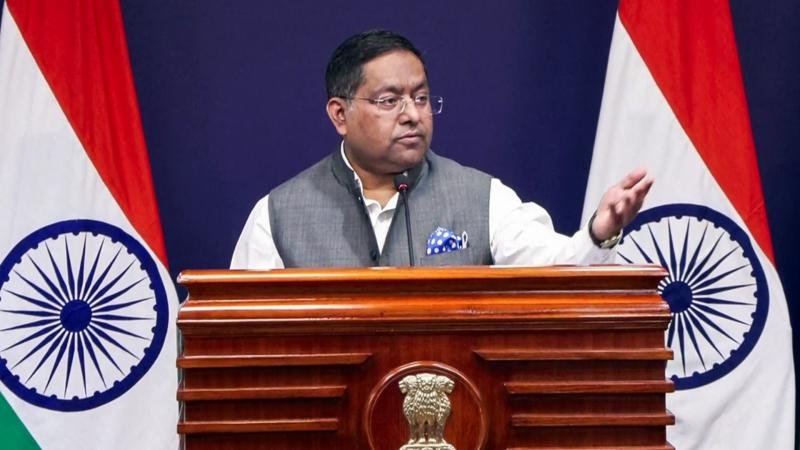

United Nations (New York). In the United Nations, India has expressed strong objection to the recent report of UN Special Rapporteur Gina Romero by adopting a strict stance. This report claimed that youth in India who speak openly on issues like mental health and gender justice have to face social stigma and harassment. During the 81st session of the Third Committee of the United Nations General Assembly, Anuj Swarup, First Secretary of the Indian Permanent Mission, rejected all these allegations outright and said that this report is completely based on anonymous, unverified and unconfirmed information, which affects the credibility of an organization like the United Nations.
Article 19 and constitutional rights cited
Indian diplomat Anuj Swarup clarified that the Constitution of India, under its Article 19, provides every citizen of the country with full right to peaceful assembly, formation of association and freedom of expression. He stressed that the protection of all these democratic rights is ensured by an independent judiciary, a vibrant and free press and a strong National Human Rights Commission. Raising serious questions on the credibility of the report, Swarup said that it is extremely irresponsible to draw such big conclusions about the world’s largest youth population based only on the statements of unknown people in the footnote.
‘This is not evidence, but rumors have to be disguised as reports’
The Indian delegation strongly attacked the process of preparing the report, saying that impartial verification of evidence is essential before reaching any conclusion. Anuj Swaroop made a scathing comment and said, “This is not a solid evidence, but is just a matter of disguising rumors as a UN report.” India strongly urged the Special Rapporteur to exercise greater care, factual objectivity and responsibility while preparing reports in future.
Example given of dialogue with youth movements and ‘CJP’
The Indian representative presented several concrete examples to refute claims that there is no civil rights and space for expression for youth in India. He pointed out that Indian youth actively participate in political movements and communicate directly with top government leadership. Referring to the protests in July, Swarup cited the example of the satirical youth group ‘Cockroach Janata Party’ (CJP), whose representatives held direct talks with Union ministers after taking out a march in the capital. He questioned that if there was no space for political disagreement in the country, such dialogue would never have been possible.
Statement of the UN Human Rights Chief and mention of government initiatives
Anuj Swarup also cited the statement of United Nations High Commissioner for Human Rights Volker Turk, in which he appreciated the movements of Indian youth and the government’s constructive dialogue with them. Along with this, while mentioning the strict steps taken by the government on issues like alleged irregularities and paper leaks in public examinations, he said that the government has seriously resolved the problems of the students. He cited the example of ‘Develop India Youth Leader Dialogue’, in which more than 50 lakh youth shared their views on nation building and national priorities.